


 38 / 172

38
02
Value creation
Productive
capital
Financial
capital
Human
capital
Natural
capital
> Equity invested (by shareholders)
> Retained earnings
> Debt funding
> Cash generated from operations
Intellectual
capital
> Recognisable brands such asTelkom, BCX, Openserve
and Trudon
> Rights and licences such as:
• Licences to provide electronic communication
networks and communication services
• Licences to use spectrum
> Research and development
> Internal policies, procedures and frameworks such
asTelkom’s governance framework, enterprise risk
management (ERM) framework, environmental
management systems (ISO 14001 certification),
with the aim of maintaining compliance and
internal control
> 18 847 employees (FY2016: 20 341)
> Employee remuneration policies and structures that aim to
attract and retain the required skills
> Experienced and skilled leadership
> Training programmes
> Talent management and succession planning programmes
> Employee wellness programmes
> Company culture
> Network footprint including mobile, wireless, fixed lines
(fibre and copper), national backhaul (connectivity
of base stations), etc
> Base stations, mast and towers, fixed-line
exchange, etc
> Spectrum
1
> Data centres
> Office and retail buildings
>Telkomowns in excess of 20 million
square metres of land
> Electricity usage (South Africa has amajority coal
base supply)
> Water
> Copper
> Timber
Social and
relationship capital
> TheTelkomFoundation
> FutureMakers programme
> Stakeholder engagement activities
> Reputation management
>Telkom’s BCOE and values that are the foundation
of our business
> Partnerships with IT application providers
1
Spectrum is the invisible frequency that travels through air. It is
highly regulated internationally and licences are required for the
different bands of spectrum.
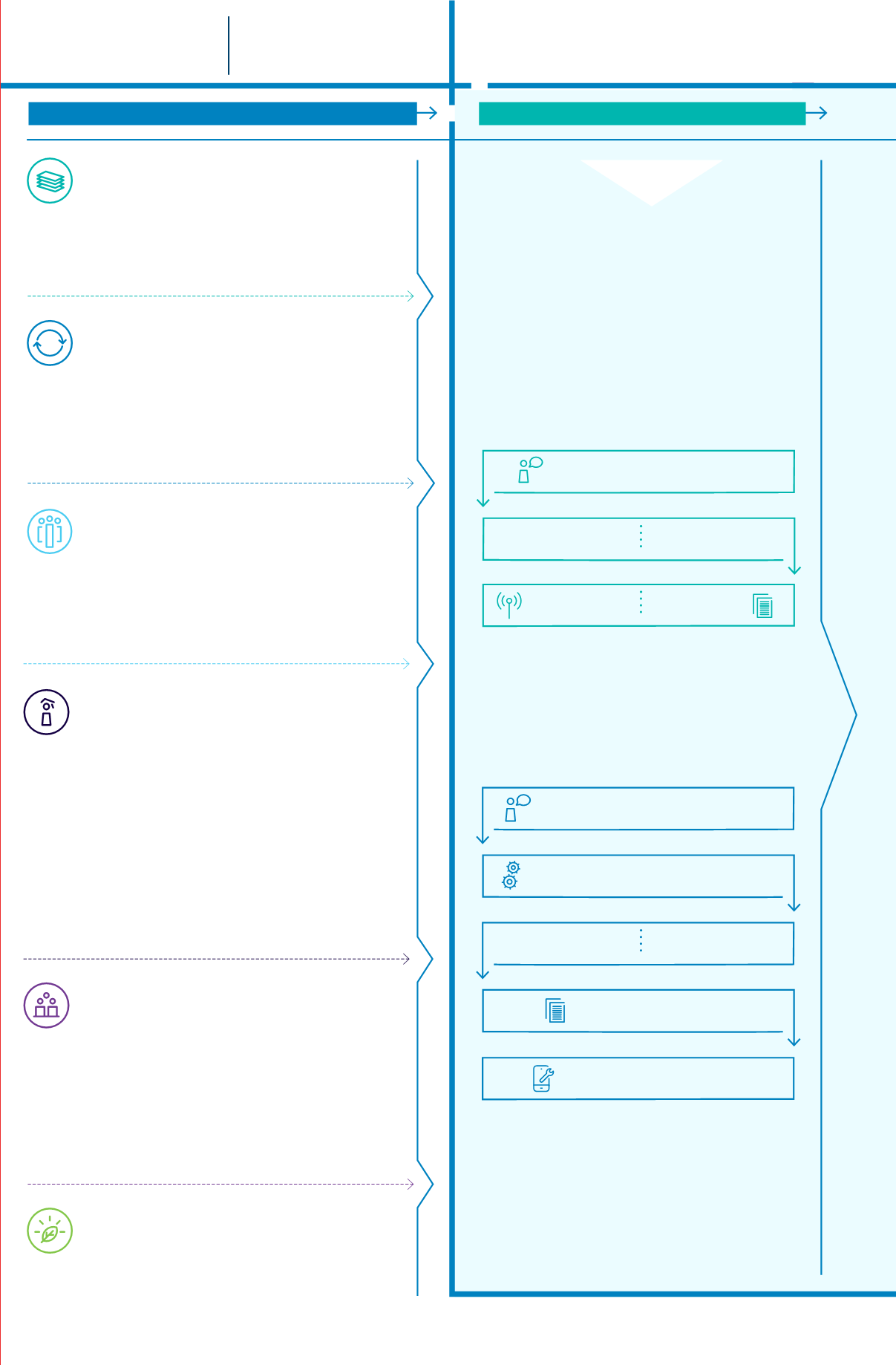
Input
Business activities
Telkom’s operational activities
high-level consist of three areas:
Telkomprovides mobile solutions and fibre through third
parties who are paid commission for resellingTelkom’s
products and services
.
Planning, building and maintaining
Telkom infrastructure
Network planning is a key component and is the basis
from which infrastructure is developed, expanded,
improved and maintained. Various permits, assessments,
commercial negotiations, compliance with regulations,
among others, are required within this process.
Connecting
consumer customers
This follows a straightforward value chain.
Providing solutions/
infrastructure to corporates
The value chain followed for the provision of these types
of solutions will depend on the nature of the request, but
typically follows the process below:
Telkom’s enabling and support functions play an
important role in building a sustainable business.
Regulatory
Human resources
Finance
Procurement
Marketing and sales
Reputation management
Strategy
Corporate social responsibility
IT
Customer request received online,
via contact centre or at retail facility
Infrastructure confirmed
(if applicable)
Service activated/
product provided
Technician dispatched
(if applicable)
Client billing
process
Customer request received directly
or via tender request
Either a standard solution or a new,
customer-specific solution is developed
Tender awarded/
solution approved
Customer billing process
Solution implemented
and activitated
Any maintenance/continuous
support provided
1
2
3
Our business model
Value creation