
- Page tools


Chairperson's report
Telkom’s group governance model supports value creation in the short, medium and long term, and ensures the board takes accountability and responsibility to direct, steer and monitor the group.
Key themes
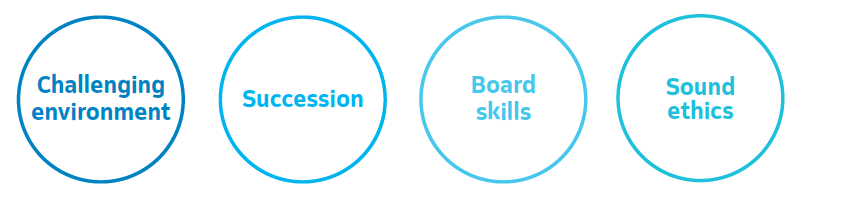
The past year has been challenging and characterised by high levels of change and uncertainty. We have responded to our external environment and made difficult decisions to position Telkom for success in a dynamic market
The impact of COVID-19 and the national lockdown have dominated the news in a year where we were already facing macro-economic challenges, regulatory uncertainty, technology disruption and increasing competition.
Telecommunications is an essential service. The group has a duty to provide a stable network and ensure reliable connectivity into the marketplace.
Our number one priority is the health and safety of employees and we reconfigured how we do business during the lockdown period, with over 80% of our workforce working remotely. The group has taken a dynamic approach to the COVID-19 pandemic, which continues to disrupt every aspect of our lives and business operations. Refer to the Group Chief Executive Officer's (GCEO) report for more detail on our COVID-19 response.
The South African economy remains challenging with gross domestic product (GDP) growth contracting in the last two quarters of the year, increased government debt and Moody’s ratings downgrade to sub-investment grade status. These factors place consumers under great financial pressure, impacting their ICT spend. This could worsen as the impact of COVID-19 becomes clearer. Telkom’s own credit rating was also downgraded by Moody’s and Standard & Poor’s (S&P) due to the rating’s link to the sovereign rating.
We operate in a highly regulated environment, which has been dominated by engagement over the Independent Communications Authority of South Africa's (ICASA) proposed framework for the allocation of spectrum, and the Competition Commission’s Data Services Market Inquiry Report, which resulted in lower data costs.
Our industry remains highly competitive with a continuous stream of technology developments and disruptions to the industry.
The unfavourable economy and technology advances have driven a change in customer preferences to mobile, fibre and other lower-margin products and services. This contributed to the rapid decline in our high-margin fixed-voice business.
We need to retain the right people and have the right skills in place to support our strategic goals
Succession planning for executive directors and critical roles was assessed by the board and the nominations and remuneration committees respectively.
We are satisfied with the talent we have in place, and the respective interventions that we have implemented. We have assessed the group executive committee (exco), subsidiary and business unit leadership skills and implemented development plans and retention mechanisms to ensure they are engaged and committed to remaining within the employ of the group. There were several factors that were considered by the board in succession planning for senior executives. These included:
- Consideration of the state of the business
- The current shift in the telecommunications space
- The current restructuring of the group
- The outstanding implementation of strategic matters
We are committed to board diversity and ensuring the appropriate skills and experience on our board
Our board skills assessment identified the need for greater expertise in the areas of telecommunications, technology and market disruptors. To capacitate the board in these areas, training and upskilling members, we appointed Sibusiso Sibisi as an independent non-executive director with effect from 1 April 2019 to provide. Sibusiso is a leading expert in ICT, business-to-business intelligence skills and the fourth industrial revolution and he strengthened our knowledge base in these areas.
Keith Rayner was appointed as an independent non-executive director with effect from 15 July 2019, and he was elected as chairperson of the audit committee at the annual general meeting (AGM) on 27 August 2019. Keith is a seasoned director with deep technical knowledge of the JSE Listings Requirements and brings a wealth of corporate governance skills onto the board. Keith’s skills in corporate finance, accounting, auditing and mergers and acquisitions identified him as the perfect candidate to replace Graham Dempster, who resigned as the audit committee chairperson at the annual general meeting (AGM) in August 2019, and from the board on 30 November 2019.
On behalf of the board, I welcome Sibusiso and Keith and look forward to working with them. We wish Graham well for his future endeavours, and thank him for his counsel and dedication over his five-year tenure.
We monitor director tenure and conduct an independence test in appearance and judgement on long-standing directors to ensure we have an independent board. We conducted an independence test for Navin Kapila during the annual board evaluation process. The results indicated that the board is satisfied with his level of independence and objectivity, and it recommended that he be re-elected at the next AGM.
We have a recruitment plan to manage director rotation and engaged an executive search service provider to address our identified skills gaps. The recruitment approach considers the talent required by Telkom and our race and gender diversity. We target credible directors who best fulfil the required criteria.
Governance is key to ensuring Telkom remains a trusted provider of telecommunication services. Our clients must trust us to provide a stable and reliable network and protect their information
As the biggest provider of telecommunication infrastructure and related services in South Africa, with significant government ownership, it is imperative that our directors, executives, and employees subscribe to the highest levels of standards and conduct.
As a board, we believe a strong group governance framework ensures effective ethics management and accountability for all Telkom’s employees. This framework assists us in our duties to ensure the effective provision of communication services, to protect information and to appropriately manage risks.
In support of ethics within the group, Telkom’s new group ethics handbook was launched during the international fraud awareness week in November 2019, and there have been numerous awareness campaigns group-wide. The purpose of the group ethics handbook is to have a one-stop integrated policy to further embed strong ethical leadership.
Transformation
Telkom SA achieved B-BBEE level 3 status largely impacted by the ownership score. Ownership was adjusted following a recent decision by the High Court in which it set aside the decision of Minister Rob Davies to grant facilitator status to government in respect of its shareholding in Telkom. The court ruled, however, that the setting aside of the Minister’s decision would not affect the B-BBEE status of Telkom and its subsidiaries for the purposes of any tender or contract awarded and/or concluded after 7 May 2019 and prior to the date of the judgment, which was 8 July 2020. The court further ruled that, for the purposes of the aforementioned tenders and contracts, the B-BBEE status of Telkom and its subsidiaries shall continue to be treated as though government’s facilitator status remained valid until the date of termination of the respective contracts, provided that the court’s order shall have no application in respect of any renewal or extension of such tenders or contracts.
The above decision by the court necessitated the resubmission of BCX’s BEE rating to the verification agency for reverification. BCX has subsequently achieved B-BBEE level 2 status.
Consequently, the ownership score has decreased from 52.45% to 27.84% and black women ownership from 20.92% to 13.41%. Management control points improved significantly due to several workforce transformation initiatives that were implemented during FY2019 and FY2020 as contained in the employment equity plan. A groupwide campaign to encourage differently-abled persons to declare their status kicked off in September 2019 and yielded some positive results in the management control scorecard. As part of our governance practice, this element is monitored monthly by the business units, and consolidated at a group level. The section 189 process may affect the management control score going forward.
Board focus areas
The board drives Telkom’s strategy and ensures that the appropriate operating model and resources are in place to meet current and future business requirements. Telkom’s evolving operating model supports that strategy and improves Telkom’s competitiveness by addressing accountability, governance and innovative ways of working.
The following operational and strategic matters were material in our board discussions, and are elaborated on throughout the integrated report:


My induction to Telkom
Since joining Telkom
as an independent
non-executive director in March 2018 and
my subsequent appointment as the board Chairperson
in June 2019,
I have completed
a comprehensive induction.
This included internal briefings with the GCEO, directors and executives; site visits to the group’s operations; and a governance roadshow with shareholders in August 2019 in preparation for the AGM.
These engagements served to expand my knowledge of the telecommunications industry and the key issues the business faces; strengthened my understanding of Telkom’s operations and the technology behind the provision of our services; and provided insights into the concerns and information needs of shareholders.
Key governance themes from the shareholder roadshow have been noted and measures were implemented to address these, where possible. These included:
- Free cash flow (FCF) to form part of short and long-term incentives. Refer to the remuneration committee report
- Appropriate skills and diversity on the board and its committees. Refer to the governance report
- Succession planning for key executives
- Telkom's engagement with the regulatory bodies. Refer to the GCEO’s report
- Government shareholding
I appreciate the insights received from all parties and look forward to future engagements to keep abreast of stakeholder views.
I would like to thank management for the co-ordination of my induction and support of my leadership role.
Appreciation
I wish to thank my fellow directors for their hard work and input into the big strategic decisions we faced.
On behalf of the board, I thank Sipho Maseko and the group exco team for their energy and resilience in a tough year.
Over and above the challenges of the organisational restructure, they tirelessly ensured employee safety and a reliable network during COVID-19. We also deeply appreciate the continued support from organised labour, our employees, customers, service providers and suppliers.
I also thank my predecessor, Jabu Mabuza, for the proper governance tone and framework he established. His leadership demonstrated flawless ethics and fiduciary responsibility and set the standard for good governance into the future.
Sello Moloko
Chairperson