
Leadership reflections on FY2026
2
The FY2026 results validate our strategy for Telkom’s transformation. We continued to deliver sustainable quality growth, stronger earnings, improved free cash flow, and enhanced shareholder returns. As a result, we increased our dividend payout ratio to 40% – 60% of free cash flow.
Mobile is compounding growth, Openserve is showing inflection, and BCX is focused on execution.
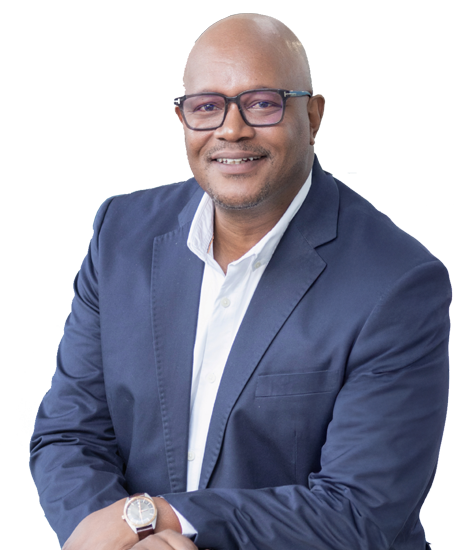
Q Every financial year has unique challenges and opportunities. What stood out in FY2026?
A This year will be remembered for a complex operating environment marked by subdued economic growth, evolving customer expectations and increasing competition across key markets. While inflationary pressures eased during the year, consumers and enterprises remained cost conscious, resulting in cautious spending patterns and slower decision-making in parts of our enterprise portfolio.
Several structural trends continued to shape our industry. The structural shift from legacy voice to data, fibre and digital services continued to accelerate. Fibre connectivity expanded through higher penetration and utilisation, while robust mobile data usage and subscriber growth continued. Our investments in Openserve’s fibre build, mobile capacity expansion, and network simplification are aligned with the industry evolution.
The approval of a transaction between a mobile network operator and a fibre infrastructure provider has reshaped South Africa's fibre market. As competition intensifies, success will depend on network scale, customer experience, connectivity rates and efficient infrastructure utilisation.
Telkom's extensive fibre footprint and integrated connectivity capabilities position the Group well to compete in this evolving market.
Disciplined execution, energy resilience and targeted capital investment remain essential to maintaining network quality and supporting growth while protecting returns.
These investments position Telkom as a reliable and scalable digital backbone supporting future connectivity, enterprise transformation and digital inclusion.
Q How would you summarise Telkom’s financial performance?
A We are now in the most demanding phase of the transformation strategy we embarked on three years ago. Executing as OneTelkom, we have built a differentiated ecosystem that leverages Openserve’s fibre network and Telkom Mobile’s reach. Combined with BCX’s IT services, this enables us to support small, medium and micro enterprises (SMMEs) and government with differentiated solutions.
We are seeing sustained growth across data revenue, EBITDA, EBITDA margin and HEPS.
Group revenue increased by 1.4% to R44.5 billion, driven by strong growth in data revenue. The revenue growth was partly offset by continued revenue strain in Converged Communications at BCX, due to the ongoing managed migration to fibrebased platforms.
Mobile and fibre-related data revenue now contributes 58.5% of total Group revenue. Fixed-voice and subscription revenue decreased by 21.8%, and customer premises equipment sales and rentals declined by 23.0%, as the structural migration away from legacy fixed services continued. The revenue mix continues to shift towards higher-quality, data-driven streams aligned with our strategic focus. This means our revenue streams are growing in the places where we are focusing. This strengthens the resilience and sustainability of our revenue base and aligns with our strategic focus on data, connectivity and digital services.
Importantly, this performance was not driven by once-off factors. While the growing contribution from data, mobile and fibre services improved the quality of our revenue mix, the performance improvement was primarily driven by disciplined cost management, operational efficiencies and the successful execution of the OneTelkom approach. These structural improvements strengthened profitability, cash generation and returns.
A strong Group EBITDA margin of 28.1%, exceeding the upper end of our guidance, reflects Group-wide structural cost management. HEPS increased, demonstrating sustained value in the first full year post the Swiftnet sale.
Telkom Consumer and Openserve delivered milestone results through increased efficiencies and improved growth, driven by our data-led strategy and OneTelkom competitive advantage. Under new leadership, BCX is repositioning itself as a connectivity provider for digital services.
Business unit performance summary
Telkom Consumer delivered strong performance, with market-leading mobile service revenue growth of 6.8% supported by strong pre-paid service revenue growth. The execution of the regional strategy delivered double-digit revenue growth, whereas post-paid subscribers and average revenue per user (ARPU) remained stable. Mobile data subscribers grew to almost 20.0 million, representing 77.8% of our total subscriber base. Our Mobile business delivered a solid 14.0% increase in EBITDA, with the EBITDA margin expanding by 2.3 percentage points (ppts) to 29.0%.
Openserve's overall revenue grew by 2.3% – the first positive uplift in nine financial years – underpinned by fibre expansion and growth in the enterprise, carrier services and broadband segments. The shift towards fibre-led revenue gained momentum and accounted for 87.0% of total operating revenue, indicating that our transition to fibre services is largely complete. External revenue increased by 10.7%. Revenue growth and cost optimisation led to an improved EBITDA margin. Openserve’s industry-leading connectivity rate improved to 53.1%, underscoring the effectiveness of our commercialisation approach.
Prudent cost management at BCX supported EBITDA margin resilience. Overall IT business revenue was stable, with cybersecurity revenue growing robustly and IT hardware and software also recording growth.
Hasnain Motlekar started as acting Chief Executive Officer effective 1 March 2026 and will be accelerating BCX's transformation.
Q Were there any refinements to Telkom’s PIVOT Strategy this year?
A The Board and management review the strategy annually to ensure it remains fit for purpose in a dynamic operating context. We adjusted the framework slightly to emphasise Telkom’s role in building the nation’s digital backbone, and placed a sharper focus on how we differentiate ourselves by providing value-rich broadband (both mobile and fibre).
We sharpened emphasis within the strategy pillars rather than redesigning them. Connectivity and data infrastructure remain the core, with a stronger focus on monetisation, affordability and utilisation rather than footprint alone. Enablers such as energy resilience, network simplification, digital platforms and cost efficiency have been elevated, reflecting their role in protecting margins and service reliability.
We also ensured alignment with the 2030 Sustainability Strategy, which aims to harness digital transformation to accelerate sustainable growth and create a positive impact on society and the environment.
Our OneTelkom approach is still key to strategy implementation and overall resilience. With the divestment of Swiftnet last year, we now have a business portfolio that positions Telkom for future growth in line with our strategic focus areas.
As a Group, our integrated ecosystem is more resilient than the sum of its parts. Our infrastructure is a strategic advantage that supports mobile, fibre, enterprise services, government connectivity, AI-enabled workloads and digital inclusion.
Q With a more robust and sustainable balance sheet, what are Telkom’s capital allocation priorities?
A We are in a much stronger position than in the past few years. Our net debt to EBITDA improved, while the cash flow position has also expanded significantly. This expands our capital allocation options and strengthens confidence in our relationships with funders.
Each business unit has the opportunity to motivate for capital allocation in line with our smart capex deployment, which is anchored on returns, capital expenditure cycles and potential Group leverage opportunities.
Our investment focus remains on expanding capacity, improving network efficiency, and modernising the core to support current and future digital services. Mobile capex prioritises densification, coverage and resilience, while fibre connectivity increasingly supports mobile backhaul through our integrated network model, homes passed and connected, and the enterprise segment. This approach means we can support advanced digital and AI-enabled services as adoption grows, without over-investing ahead of demand in a price-sensitive market.
Our free cash flow improvement is increasingly supported by structural operational improvements, including margin expansion, disciplined capex deployment, network simplification and lower financing requirements. This gives us confidence that cash generation is becoming more sustainable over time.
Q Telkom delivered strong results, yet maintained its medium-term guidance. Why?
A While performance continues to improve, we remain mindful of the uncertain macro-economic environment, geopolitical developments and evolving competitive dynamics.
The progress achieved through disciplined execution of the OneTelkom approach gives us confidence in our medium-term outlook. However, we remain committed to a prudent guidance framework that preserves flexibility in an evolving operating environment.
Q What is Telkom’s biggest opportunity in the medium term?
A Rising data usage, increasing smartphone adoption, and stronger demand for faster and more reliable digital services over traditional voice are the Group’s main growth and opportunity drivers. There is opportunity in centralised data centre demand, and latency-driven distributed AI workloads. Our infrastructure and capital investment have positioned us well to leverage these opportunities.
Almost all (97%) of the devices on our network are now 4G-enabled, and voice over LTE adoption accelerated to 80% from 61% in FY2025. This provides compelling evidence that customers need modern, data-optimised infrastructure, even where full 5G coverage is still emerging.
As high-end devices primarily drive 5G demand, we are focusing on corporate and industrial 5G opportunities for now, particularly in mining and indoor coverage. We are prioritising efficient rollout in these high-demand areas, including targeted upgrades to site infrastructure such as power, transmission and structural capacity. At the same time, we will balance ongoing LTE capacity expansion with 5G investment to ensure we continue meeting current demand while building for the future.
Over the next few years, LTE and 5G will coexist on a shared infrastructure platform. We expect 5G adoption to continue expanding across key urban and economic centres, supporting growing consumer and enterprise demand.
Telkom has a unique advantage, as we never deployed a 2G network and from the onset, oriented our mobile offering around 4G/LTE. Therefore, we can capture market share with 2G mobile users as they migrate to 4G or higher. As data usage increases, so does demand for higher-value services.
The pre-paid market remains a significant growth area. In FY2026, mobile data subscribers and data traffic increased strongly, while the pre-paid segment delivered stellar service revenue growth. This shows that value-based propositions and segmentation continue to unlock growth, even in a saturated market. We are also increasing market share in non-metro areas, which have previously been underindexed.
A further opportunity lies beyond connectivity. Digital and financial services – including airtime advance, insurance and adjacent digital platforms – are scaling and deepening customer stickiness. This enables us to increase our share of wallet without relying solely on subscriber growth. These services are increasingly important contributors within our Mobile business.
Finally, fibre and fixed-mobile convergence create longer-term growth optionality. As fibre penetration expands and mobile and fixed usage converge, our ability to leverage Openserve’s infrastructure alongside mobile distribution increases. This positions Telkom to capture household and SMME data growth more effectively. It means that growth will come from data usage, platform services and integrated connectivity, not from increasing subscribers alone.
Q Regulatory compliance remains one of the top material matters and a key risk. How are you navigating a continuously evolving landscape?
A Regulation, spectrum and pricing policy remain firmly on our radar, as they materially shape how value is created in the sector over time.
The regulatory environment is constantly changing. For example, the proposed Electronic Communications Amendment Bill, alongside broader regulatory focus on open access and infrastructure sharing, has the potential to reshape market dynamics. The industry is also preparing for the implementation of new data-related regulatory requirements that are expected to come into effect in January 2027.
We engage proactively with regulators to ensure outcomes support long-term investment, competition and consumer benefits, while protecting the sustainability of networks. The last spectrum auction materially improved industry capacity. However, further spectrum – particularly in high-demand bands – will be needed to support continued growth in data traffic and service quality, and to enable cost-effective coverage and improved network economics.
Our strong balance sheet and smart capex deployment position us to participate responsibly when additional spectrum opportunities arise, without compromising returns.
Affordability remains a defining feature of the South African market. Our focus remains on value-based pricing. Instead of engaging in unsustainable price competition, we aim to offer affordable access while protecting margin through efficiency, scale and differentiated propositions. This balanced approach is central to delivering sustainable growth in a highly regulated and price-sensitive environment.
Q Telkom’s infrastructure is key to the delivery of financial services in South Africa. How do you ensure network availability?
A It is important to monitor both network availability – which averaged 99.99% for FY2026 – and redundancy. High redundancy creates multiple paths for data traffic and uses backup systems to minimise downtime, ensuring reliable network services. Telkom has over 180 000 km of fibre footprint, which allows for high levels of redundancy.
In South Africa, demand patterns shift dynamically as people work, live, and consume data, and as businesses expand and invest in different regions. For example, traffic usage trends direct our investment in fibre to homes, as this takes pressure off the mobile network. In the same vein, we use redundancy to mitigate the risk of cable theft, vandalism and other damage. Openserve’s undersea cable partnership with Google adds a further dimension of reliability, providing support against digital shedding on a national scale.
Our continued investment in network availability, additional sites and backup power infrastructure has contributed to lower roaming costs.
We also measure network availability through service reliability and operational metrics. Openserve increased its net promoter score (NPS) to 79.0, its highest to date, as the business unit continued to improve the average time to repair or install equipment, resulting in less downtime and better efficiencies.
Q How will the OneTelkom approach serve the Group going forward? What are the key drivers of success?
A The OneTelkom approach represents a deliberate shift toward a more integrated and customer-led Group focused on two priorities: first, accelerating integration where it creates clear value; and second, carefully managing potential disruption to existing operations and performance.
We have started seeing the benefits of a co-ordinated go-to-market approach and shared capabilities. This will unlock greater value through convergence, improved capital efficiency, and a more cohesive response to market dynamics.
The OneTelkom impact is increasingly visible in our financial measures through stronger margins, improved free cash flow, disciplined capex and a more resilient balance sheet.
Sustaining this momentum will depend on continued alignment at leadership level, supported by a performance architecture that drives Group-wide outcomes. Equally important is the progression toward integrated systems and a single view of the customer, enabling more informed and co-ordinated decision-making.
BCX is a good example of a business unit that was challenged in the past by operating in isolation. As part of the Telkom portfolio, it can play a key role in providing converged solutions together with other business units, creating greater value for customers through the OneTelkom approach.
Q Telkom recorded its highest ever employee participation rate in the latest Voice of the Employee survey. What does this signal?
A We achieved a 75% participation rate and a score of 85.2% in the Employee Engagement Index, which reflects high engagement and overall satisfaction of our employees.
Employees show high levels of advocacy and inspiration, and the work environment continues to strengthen in areas such as customer focus, accountability and collaboration. Confidence in the Group’s long-term strategic direction remains strong, supported by clear communication and alignment in several business areas.
We are also making progress in key transformation areas, such as the number of women in leadership positions, which increased to 37.3% this year.
Q What can we expect from Telkom in FY2027, and where will you focus?
A Our data-led strategy remains our key growth driver. Having established the OneTelkom approach and strengthened our position, we are now focused on the next phase of value creation. This will be achieved through further efficiency gains, improved growth across the Group, and the disciplined execution that has become the hallmark of our transformation.
While the operating environment remains uncertain, with geopolitical tensions and rising energy costs affecting consumers and businesses, we remain focused on balancing growth and efficiency. We continue to monitor these developments closely while pursuing our twin goals of revenue growth and operational excellence.
At business unit level, Consumer will continue to drive mobile service revenue growth through improved customer experience, compelling value propositions and execution of our regional strategy.
Openserve will focus on overall revenue growth across the broadband, enterprise and carrier segments, supported by continued fibre monetisation. Its ongoing network simplification and energy transformation initiatives are expected to support margin expansion and operational efficiency.
BCX is repositioning connectivity as a foundation for digital services such as cloud, data platforms and intelligent applications. The business is reviewing its product portfolio to prioritise offerings that are scalable and can deliver improved profitability. BCX's long-term differentiation lies in combining digital services with Telkom’s connectivity infrastructure through OneTelkom.
While the BCX turnaround remains a multiyear journey, management's focus is on improving portfolio quality, scaling cloud and cybersecurity solutions, and enhancing execution discipline to support sustainable profitability over the medium term.
We will continue to balance growth investment and cost discipline. Capex intensity is expected to remain within the 12% to 15% framework, primarily supporting mobile and fibre growth. At the same time, ongoing cost efficiencies and operational discipline will support free cash flow generation and a prudent leverage position.
Overall, our objective is a simpler, more focused Telkom – one that consistently converts strategy into earnings, cash flow, resilience and sustainable shareholder value. As we enter the second year of our mediumterm guidance, we are confident that our framework captures our commitment to disciplined execution.
Q What gave you the energy and inspiration to lead Telkom’s achievements this year?
A For me, the Crowded House song, “Always take the weather with you”, is a reminder that we all have a role to play in Telkom’s future, and the agency to create success.
Our customers, who remained loyal and supportive, are first in line when it comes to acknowledging contributions for FY2026.
I also thank our employees for their resilience, hard work and commitment, and I am grateful for the Board’s support and guidance. Together with our partners, we truly form the backbone of South Africa’s digital future.
Serame Taukobong
Group Chief Executive Officer