
We seek to minimise the environmental impacts of our operations while improving resource efficiency across our network infrastructure and facilities.
Telkom continues to advance its decarbonisation and environmental stewardship initiatives through energy efficiency improvements, renewable energy deployment and responsible waste management. These initiatives support the resilience of our network infrastructure and contribute to our long-term sustainability.
Our science-based emission reduction targets were validated and approved by the Science Based Targets initiative (SBTi), reflecting our commitment to combat climate change in line with global goals. We have reduced our Scope 1 and Scope 2 emissions by 50.8% against our FY2022 baseline, demonstrating steady progress in lowering the carbon intensity of our operations.
Strategic focus areas
FY2026 achievements
Driving energy efficiency and alternative energy
Reducing Telkom's carbon footprint
Managing our Scope 3 GHG emissions
Managing Telkom's water consumption
Responsibly managing hazardous waste
| External moderate assurance on selected sustainability indicators. Refer to the FY2026 Independent Assurance Report, available online. |

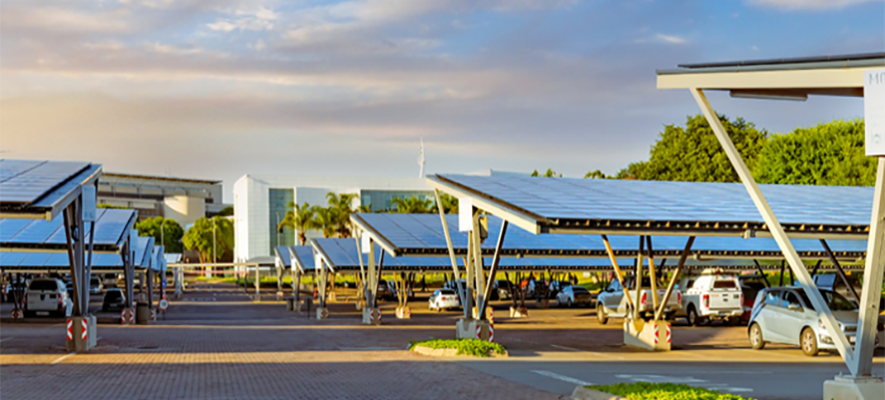
Telkom's energy strategy focuses on improving operational resilience, reducing energy costs and lowering carbon emissions across the Group's operations. In FY2026, we continued to implement energy efficiency and renewable energy initiatives to support network resilience and reduce reliance on diesel-powered backup generation.
Key initiatives included:
Renewable energy initiatives generated approximately 9.9 GWh of electricity, while energy efficiency initiatives reduced consumption across the Group.
Telkom energy sources
% and (GJ)
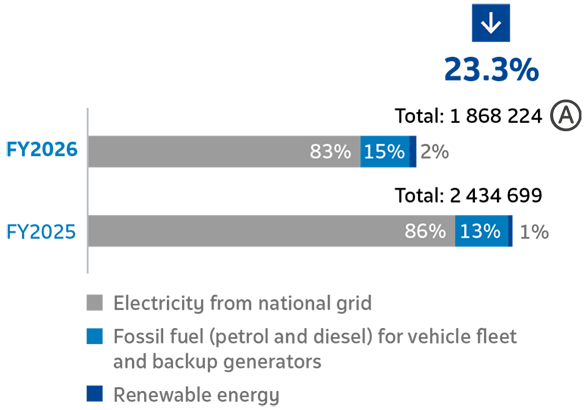
Our total energy spend decreased by 23.3% year on year, translating into annual savings.
We are exploring additional energy procurement mechanisms, including power purchase agreements with renewable energy providers.
Improved energy monitoring and optimisation capabilities increased energy consumption visibility across operational sites, enabling us to identify further reduction opportunities.
Reducing GHG emissions is a core component of our environmental strategy. In FY2026, Telkom reduced its Scope 1 and Scope 2 emissions by 50.8% against our FY2022 baseline.
Scope 1 emissions represent approximately 2.2% of Telkom's total carbon footprint. The emissions decreased by 21.4%, primarily due to reduced diesel consumption resulting from lithium-ion battery installations and generator optimisation initiatives.
Scope 1 emissions (tCO2e)

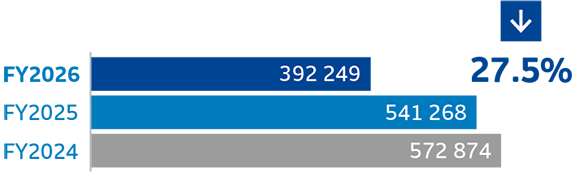
Scope 2 emissions represent 31.8% of Telkom's carbon footprint. The emissions declined by 27.5%, supported by lower electricity consumption resulting from renewable energy deployment, energy efficiency initiatives and site terminations.
Scope 2 emissions (tCO2e)
Telkom has undertaken a climate scenario analysis to assess the resilience of its infrastructure under different climate futures. Physical and transitional risk insights inform resilience planning, including infrastructure upgrades, energy optimisation and disaster response capabilities.
Scope 3 emissions represent 65.9% of Telkom's carbon footprint. The emissions decreased by 14.2%, mainly due to a reduction in our Category 1 (Purchased Goods and Services) and Category 3 (fuel-and energy-related activities) emissions.
Scope 3 emissions (tCO2e)

Telkom continues to strengthen the management of Scope 3 emissions across its value chain. The procurement team identified the Group's top 200 suppliers, representing over 50% of procurement spend and associated emissions, for focused engagement on emissions disclosure and reduction. Presently, 39 suppliers are disclosing their GHG emissions.
We restated our Scope 3 emissions following several methodological enhancements aimed at improving the accuracy of emissions quantification and categorisation. Refer to the sustainability report.
We have incorporated sustainability clauses into supplier contracts to encourage them to measure, monitor and progressively reduce their GHG emissions. We have also transitioned our Scope 3 accounting from spend-based to activity-based emissions measurement, enabling improved visibility of emission hotspots across the value chain.
We invested R44.4 million in energy efficiency and decarbonisation initiatives in FY2026, delivering measurable reductions in emissions and energy costs.
| External moderate assurance on selected sustainability indicators. Refer to the FY2026 Independent Assurance Report, available online. |

Telkom is not a material water user. However, we recognise the increasing risks associated with water shortages and their potential impact on employees, operations and the broader economy.
Water consumption across our operations is mainly associated with cooling systems, sanitation, catering and landscaping. Municipal supply is the Group's primary water source.
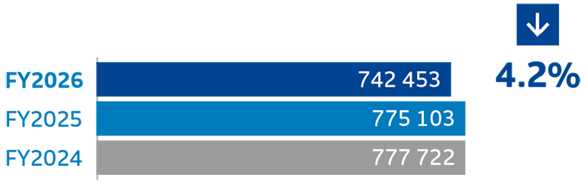
Water consumption decreased by 4.2% due to account terminations.
Water consumption (kL)

Electronic waste is Telkom's most significant hazardous waste stream.
The Group prioritises waste reduction through reuse, resale and recycling initiatives. Legacy network and IT equipment that reaches end-of-life is either redeployed internally, resold or responsibly recycled through certified waste management partners.
E-waste recycled (tonnes)

We are collaborating with the Council for Scientific and Industrial Research (CSIR) through the Natural Cleaner Production Centre to identify further opportunities to improve our waste management and strengthen circular economy practices.
Telkom complies with environmental regulations through regular site inspections, audits and reviews of operational procedures.
No environmental incidents requiring regulatory reporting occurred in FY2026.
The Group reduced its R22 refrigerant gases from 97 tonnes (2016 baseline) to 27 tonnes, exceeding the December 2025 regulatory target.
We will continue to expand renewable energy use, improve energy efficiency across our infrastructure and enhance the measurement and management of emissions across our value chain.
Key priorities include:
These initiatives support Telkom's transition to a lower-carbon, resource-efficient operating model and strengthen the resilience of our digital infrastructure.