
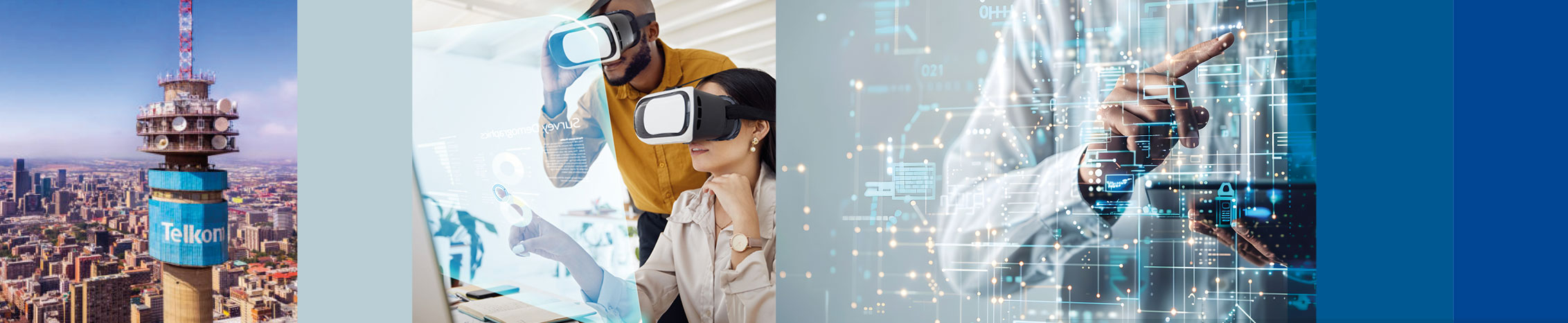
For almost 35 years, Telkom has played a central role in connecting people, businesses and communities. From its origins as the national landline telecommunications operator to its evolution into a provider of mobile services, digital infrastructure and technology solutions, Telkom’s journey reflects the transformation of South Africa’s communication landscape.
Our foundation phase strategy was anchored in a five-year monopoly for fixedline services while expanding infrastructure and preparing for competition.
Telkom was established following the restructuring of South Africa’s telecommunications services, creating the country’s primary telecommunications operator
Mobile connectivity was introduced, expanding access to telecommunications services
Our privatisation and JSE listing phase was characterised by aggressive network digitisation and the start of building our own independent mobile capability.
Introduction of strategic investors to support Telkom’s commercialisation and operational development
Introduction of ADSL broadband enabled faster internet connectivity for businesses and households
Listing on the Johannesburg Stock Exchange (JSE) expanded access to capital markets and increased public ownership
Participation in West Africa Cable System submarine infrastructure improved global connectivity
Telkom disposed of its majority shareholding in a South African mobile operator and repositioned its mobile strategy
Innovation and brand building supported mobile growth and a broader fixed-mobile convergence strategy.
Launch of 8.ta marked Telkom’s entry into the competitive mobile telecommunications market through its own mobile network
Initiated a Group-wide transformation focused on operational efficiency and growth
Acquisition and diversification beyond traditional connectivity led to a new operating structure and accelerated growth ambition.
Official launch of fibre to the home
Telkom Mobile launched LTE, strengthening mobile broadband capabilities
Acquisition of BCX expanded Telkom’s information and communications technology (ICT) and digital services capabilities
Openserve launched as an open-access wholesale connectivity provider
Introduction of FreeMe plans (South Africa's first truly data-centric mobile plans) supported subscriber growth and enhanced customer value
Strengthened ICT capabilities through BCX and enterprise connectivity solutions
Telkom Mobile reached 10 million subscribers within 10 years of its establishment
Our PIVOT Strategy directed our response to the shift from voice to data and from copper to fibre, while the OneTelkom approach enabled us to leverage our strategic infrastructure more effectively.
Serame Taukobong appointed Group Chief Executive Officer (GCEO), focusing on infrastructure growth and strategic value creation
Obtained 20 MHz of 800 MHz and 22 MHz of 3 500 MHz from spectrum auction, resulting in efficient network deployment
Mobile business becomes the third-largest operator in South Africa by subscriber base
Launch of the OneTelkom approach to unlock greater value through integrated capabilities, infrastructure leverage and customer-centric solutions
Openserve surpassed 1 million homes passed with fibre
Telkom Mobile reached 20 million subscribers, reflecting strong growth in the mobile market
Openserve surpassed 500 000 homes connected, strengthening Telkom's fibre leadership
Disposal of Swiftnet unlocked value and strengthened Telkom’s financial position
Our Mobile business achieved three years and two quarters of uninterrupted market-leading service revenue growth, reflecting the success of our value-led and data-driven strategy
Telkom continues to invest in mobile connectivity, fibre infrastructure and digital services to be the backbone of South Africa's digital future and create sustainable value for stakeholders.