
This integrated report is a core element of our annual reporting process. In our regular engagement with providers of financial capital, we obtain their views on what is material and how to improve our reporting. Our refinements support our commitment to effective and transparent reporting, while keeping a broader group of stakeholders in mind.
Together, these business units support Telkom’s purpose of seamlessly connecting our customers to a better life. Following the divisionalisation of Gyro in FY2025, Gyro has been integrated into the Corporate Centre and is therefore no longer reported separately.
To provide clarity when discussing strategy and performance, we use the following time horizons:
The report covers FY2026 and includes significant events occurring after year-end up to the date of approval by the Board.
The reporting boundary covers Telkom SA SOC Ltd, representing Telkom Group, which comprises Telkom Company and its subsidiaries. Telkom Company comprises the Corporate Centre and a division, Telkom Consumer. Telkom Group’s operating subsidiaries are Openserve and BCX. These divisions and subsidiaries constitute Telkom’s business units.
BCX's international operations are excluded from non‑financial KPI reporting due to their immaterial contribution to the Group’s sustainability performance, unless otherwise stated. Such exclusions are assessed on a KPI-by-KPI basis.

Telkom’s integrated reporting process is based on the Group’s commitment to integrated thinking and transparent reporting.
The report is co-ordinated by the investor relations team under the leadership of the Group Chief Financial Officer (GCFO). The team works closely with subject matter experts across the Group to ensure the report adheres to the required regulations, frameworks and standards.
Content development draws on internal management information, stakeholder engagement insights, strategic planning processes and information contained in other reports within Telkom’s reporting suite.
The Group Executive Committee (Exco) reviews the report before submission to the relevant Board Committees for consideration.
The Board provides final approval of the integrated report.
Investor relations team and business unit contributors
Exco and Board Committees
Board approval and digital publication
This report focuses on matters that materially affect our ability to execute our strategy and create or preserve value over the short, medium and long term. These matters have the potential to erode value for providers of financial capital and other stakeholders.
During FY2026, Telkom finalised a double materiality assessment, evaluating both:
The results of this assessment informed the identification and prioritisation of Telkom’s material themes and sustainability priorities presented in this report.
The final set of material themes was reviewed by management and approved by the Exco and Board.
More detailed sustainability disclosures informed by the double materiality assessment are provided in Telkom’s sustainability report.

Desktop review to scan the environment, consider risks, determine key topics from Board and Committee packs, and benchmark Telkom against a set of peers.
Engagement with internal and external stakeholders to identify a universe of topics across financial, environmental, social and governance dimensions.
Workshop to prioritise the identified topics according to their potential enterprise value impact, and to understand our potential impacts on stakeholders.
Validation of the final set of themes and priorities, which the Group Exco, Audit Committee and Board approved.
Report on Telkom’s material themes, with the integrated report taking a financial materiality approach and the sustainability report focusing on impact priorities.
Details on material themes
Telkom applies a combined assurance model to enhance the reliability and integrity of the information presented in this report.
Telkom Group Internal Audit (TGIA) assessed the completeness and accuracy of selected strategic non-financial KPIs disclosed in the report.
Certain financial information in this report is extracted from the Group’s audited consolidated AFS, while the pro forma financial information is derived from the Group’s annual results booklet and is supported by an unmodified ISAE 3420 reasonable assurance report, both provided by PricewaterhouseCoopers Inc.
Independent external assurance provider IBIS ESG Consulting Africa (Pty) Ltd (IBIS), now SLR Consulting (SLR), provided moderate assurance on selected non-financial indicators disclosed in the report. Assured non-financial indicators are indicated with this icon A. Refer to SLR's FY2026 statement of assurance, available online.
Several statements in this report, and verbal statements that may be made by Telkom or Officers, Directors or employees acting on Telkom’s behalf, constitute or are based on forward-looking statements. Such statements involve known and unknown risks, uncertainties and other important factors that could cause our actual results or achievements to be materially different from our future results, performance or achievements expressed or implied by such forward-looking statements.
Telkom cautions readers not to place undue reliance on these forward-looking statements. All written and verbal forward looking statements attributable to Telkom, or persons acting on Telkom’s behalf, are qualified in their entirety by these cautionary statements. Unless we are required by law to update these statements, we will not necessarily update any of these statements after the date of this report so that they conform either to the actual results or to changes in our expectations.
Any forecast financial information contained in this report was not reviewed or reported on by our external auditors.
The Board acknowledges its responsibility for the integrity of Telkom’s integrated report. The Board confirms that it has collectively reviewed the contents of the report and leveraged the combined assurance obtained.
The Board is confident that the report
addresses all material themes, and
concludes that the information is materially
presented according to the
The Board approved this report on 15 July 2026.
Mvuleni Geoffrey Qhena
Board Chairperson
Serame Taukobong
Group Chief Executive Officer
Nonkululeko Dlamini
Group Chief Financial Officer
Integrated reporting and stakeholder information requirements continue to evolve. We welcome feedback to improve our reporting. Comments and feedback can be sent to our investor relations team at telkomir@telkom.co.za.
We use icons to help stakeholders navigate the report and understand the integrated nature of Telkom’s disclosures.


A External moderate assurance on selected sustainability indicators.
Refer to the FY2026 Independent Assurance Report, available online.
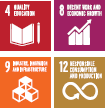
Telkom contributes to four primary SDGs:
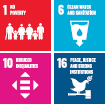
We influence a further four SDGs through our Sustainability Strategy:

Broadband refers to the high-speed internet provided through fibre, digital subscriber line (DSL), long-term evolution (LTE) and 5G networks.
EBITDA (earnings before interest, tax, depreciation and amortisation) is a financial metric used to assess Telkom's operational performance by calculating its earnings before the impact of non-operational expenses.
Homes passed is the potential number of premises we are capable of connecting to a fibre-to-the-home (FTTH) network in a service area. Homes connected is the number of premises connected to our network that are subscribers or can become subscribers without further installation work.
Next-generation networks and fibre refers to advanced fibre-optic technology that offers higher speeds, greater bandwidth and improved performance compared to traditional fibre networks. The technology is designed to meet the increasing demand for data heavy services like streaming, cloud computing and smart applications.
Spectrum refers to the range of electromagnetic frequencies used to transmit data wirelessly. Spectrum is divided into different bands (e.g. radio, microwave and millimetre waves) and is a limited resource that mobile operators use to deliver services like 4G, 5G and Wi-Fi. Access to spectrum is regulated by government authorities, and its availability directly impacts the speed, coverage and quality of wireless communications.
Tier IV data centre is the highest level of data centre classification. Tier IV data centres are designed for maximum uptime and reliability. They offer redundant systems for power, cooling and network connectivity, ensuring 99.99% availability.
5G is the fifth generation of mobile network technology, offering faster speeds, lower latency and greater capacity than previous generations.
Refer to abbreviations for full glossary