Ensuring transparency and accountability
6
Our governance approach is based on the principles of transparency, accountability, fairness, responsibility, effectiveness, stakeholder engagement and risk management.
Our governance structures and processes are aligned with the pillars of our PIVOT Strategy and Sustainability Strategy. They enable us to swiftly navigate challenges, seize opportunities and achieve our overarching purpose, while ensuring we remain sustainable over the short, medium and long term.
Transparency is a key aspect of our governance and decision-making processes. We take accountability for our actions. Further, we ensure accurate and clear communication in support of our stakeholder-inclusive approach, which requires treating all stakeholders justly and equitably.
Through effective governance we build trust, drive innovation, and enhance our overall positive impact on the environment and the communities we serve.
Telkom and its Board apply the principles of King IV and have reported accordingly for FY2026. We welcome the introduction of King V, with its revised principles and enhanced disclosure framework. We are assessing its implications and will transition to reporting in line with the new Code and its disclosure framework from FY2027. This is in accordance with the effective date for financial years commencing on or after 1 January 2026, as guided by the King Committee.
The Board has set a high standard for ethical practices. Telkom has zero tolerance for unethical behaviour, fraud and corruption. Directors and employees are expected to abide by ethical principles.
The Group Code of Ethics articulates our ethical principles and practices. Both the Board and employees annually pledge their commitment to the Code and ensure that business is conducted in an ethical manner. Further, the Board and employees are required to annually (and as when required) declare any conflicts of interest.
The Board is satisfied that its Members individually and collectively are cultivating and exemplifying the characteristics and values of integrity, competence, responsibility, accountability, fairness and transparency, as articulated in the King Code.
Board
Board culture and ethics
Board and Committee structures
Board and Committee evaluations
Succession planning and Director rotation
Board charter and key policies
Memorandum of incorporation (MoI)
JSE Listings Requirements
Companies Act and King IV
Financial governance
Internal controls
Budgeting processes
Operational performance
Capital allocation
Taxation
IT governance
Funding
Social and
sustainability
governance
Sustainability Strategy
Stakeholder engagement
HR development
Occupational health and safety
Transformation
Environment
Risk governance
ERM
Internal audit
Financial
capital
Productive
capital
Intellectual
capital
Human
capital
Social and relationship capital
Natural
capital
Governance
outcomes

Ethical leadership

Effective control

Good performance

Legitimacy

Our Group governance framework articulates and gives effect to the direction set by the Board on relationships and the exercise of authority across the Group. The framework ensures there is strategic and governance alignment within the Group. The content of the framework is subject to and compliant with the statutory and regulatory environment, with key regulatory considerations including the JSE Listings Requirements, the Companies Act, the MoI and the King Code.
The overall accountability and responsibility to direct, steer and monitor the business of the Group rests with the Board, and proportional governance is applied where applicable for what is suitable and appropriate for each subsidiary. The framework is reviewed every three years or as and when required. The framework was reviewed in FY2026 to ensure alignment with applicable legislative and regulatory prescripts and to incorporate enhancements that ensure proportionate governance across the Group. The next review will be conducted in FY2028.
Key matters addressed in the Group governance framework include:
Telkom is managed under the direction of the Board. The Board has authority to exercise all the powers and perform any of the Telkom functions, except where the Companies Act, JSE Debt Listings Requirements, JSE Listings Requirements, MoI, King Code or any other applicable legal prescript provides otherwise.
The Board has established the following Committees to assist it in fulfilling its responsibilities:
| Committees | ||||||
|
A
|
Ri
|
Re
|
S
|
N
|
I
|
T
|
| Audit Committee |
Risk Committee |
Remuneration Committee |
Social and Ethics Committee |
Nominations Committee |
Investment and Transactions Committee |
Technology Committee |
 |
|
|
|
|
|
|
The Group Executive Committee (Exco) is a management committee established by the Board. Its composition is determined by the GCEO. It supports the GCEO in the execution of the Group's strategy and the oversight of day-to-day operations.
The GCEO is responsible for leading executive management. He is empowered by the Board to take any actions on behalf of the Company, subject to the principles set out in any law and the DoA. He may also delegate his powers, subject to the limitations imposed by the DoA or any further limitations determined by the Board.
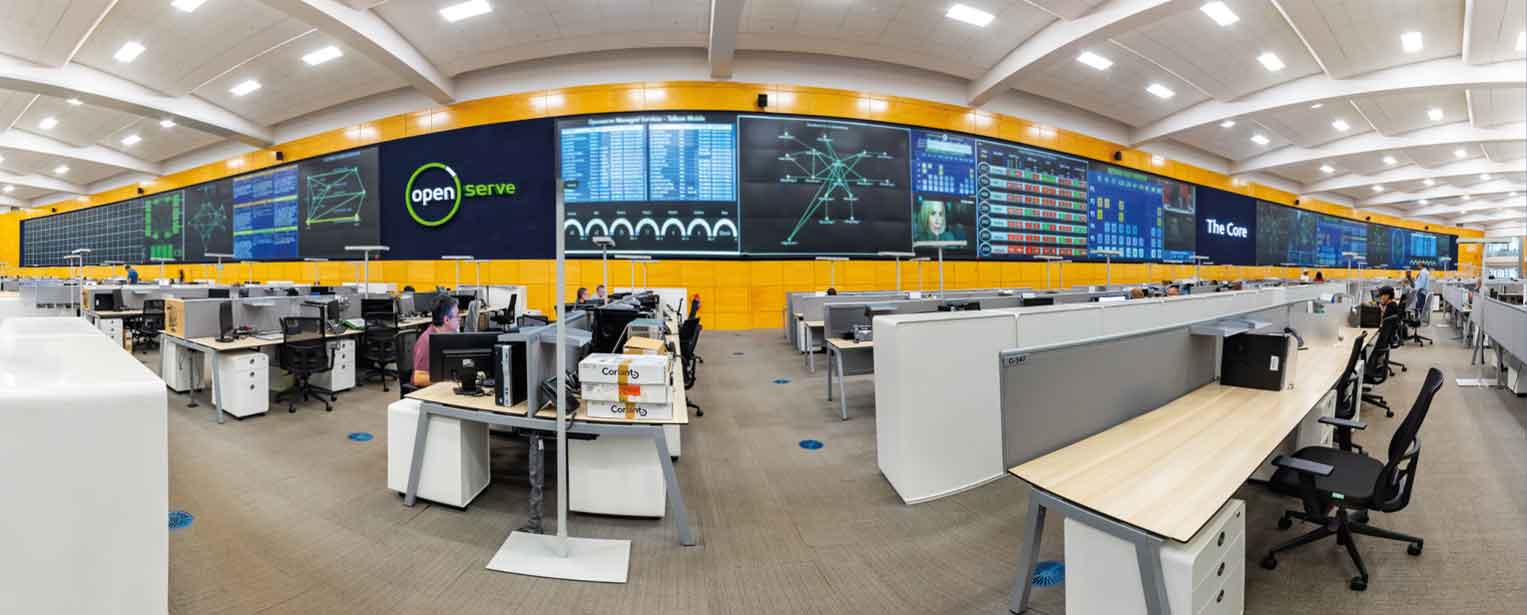
The DoA forms part of Telkom's broader corporate governance framework. It sets out the principles and delegated authorities for the Board and the GCEO, as well as the sub-delegations from the GCEO to management.
The DoA ensures smooth and effective day-to-day operations and is embedded as a key driver of productivity and agility.
We undertook an extensive review of the DoA in FY2026 to ensure it was fit-for-purpose and aligned with applicable legislative and regulatory prescripts. Enhancements were incorporated to increase efficiency in decision-making and approval processes, based on operational needs.
The Board is satisfied that the DoA framework contributes to operational effectiveness and ensures clear definition of the respective roles and decision-making authority of the Board and management.
There were no notable changes to the governance structures or the Committee mandates and charters during FY2026.
as at 31 March 2026
|
Re |
N |
|||
|
|
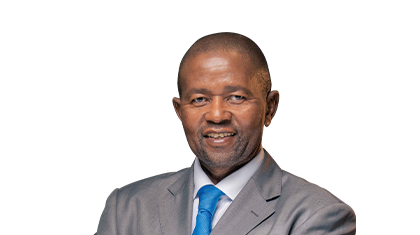
MG Qhena (60)
Board Chairperson
Appointed:
27/3/2023
MG Qhena (60) Board Chairperson
27/3/2023
Principal skills:
Accounting, auditing, business leadership, corporate finance, governance and mergers and acquisitions (M&A)
Other directorships:
Exxaro Resources Ltd, Investec Bank Ltd
|
A |
Re |
Ri |
||
|
|
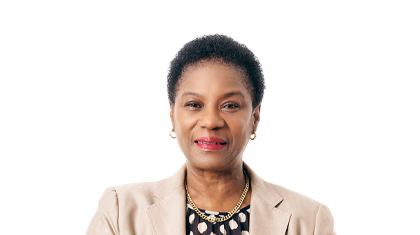
O Ighodaro (63)
Appointed:
1/7/2021
O Ighodaro(63)
1/7/2021
Principal skills:
Accounting, auditing, business leadership, finance, strategy, governance, M&A, risk management and commercial expertise
Other directorships:
Old Mutual Ltd, Sabvest Capital Ltd, Spar Group Ltd and others
|
Re |
N |
I |
||
|
|
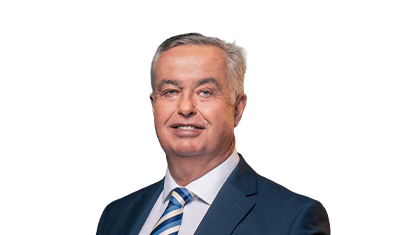
B Kennedy (66)
Appointed:
15/7/2022
B Kennedy (66)
15/7/2022
Principal skills:
Business leadership, corporate banking, debt and equity capital markets, e-commerce, governance, private equity, commercial property finance and M&A
Other directorships:
Absa Group Ltd, African Rainbow Minerals Ltd, Thulamela Investments (Pty) Ltd and others
|
A |
Re |
I |
||
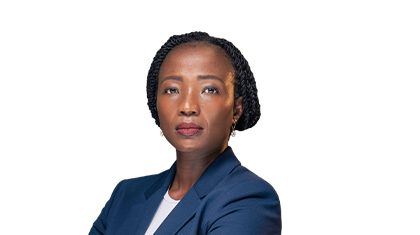
KP Lebina (45)
Appointed:
15/7/2022
KP Lebina (45)
15/7/2022
Principal skills:
Accounting, auditing, business development, business leadership, corporate finance, governance, investor relations and risk management
Other directorships:
DRDGold Ltd, Waldobuzz (Pty) Ltd, TriAlpha Investment Management (Pty) Ltd and others
|
A |
I |
T |
||
|
|
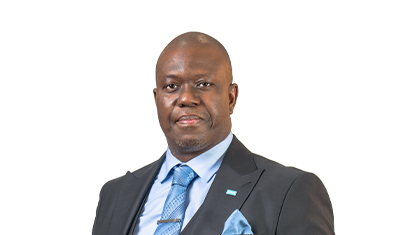
PCS Luthuli (53)
Appointed:
25/5/2018
PCS Luthuli (53)
25/5/2018
Principal skills:
Accounting, auditing, business leadership investments, corporate finance, M&A and risk management
Other directorships:
Mpact Ltd, Mpande Property Fund Manager (Pty) Ltd, Edison Hill (Pty) Ltd and others
|
Ri |
N |
S |
||
|
|
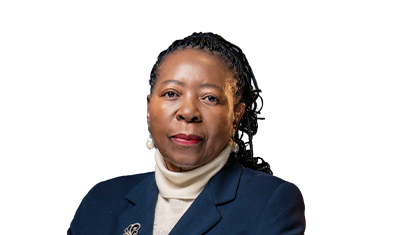
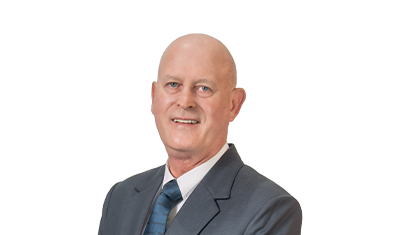
EG Matenge- Sebesho (71)
Appointed:
1/7/2021
EG Matenge- Sebesho (71)
1/7/2021
Principal skills:
Financial markets and investments, international business, marketing, risk management and governance
Other directorships:
FinMark Trust and First National Bank Ghana Ltd
|
A |
Ri |
I |
||
|
|
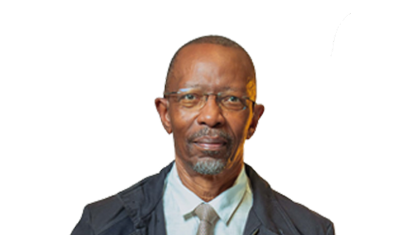
KA Rayner (69)
Appointed:
15/07/2019
KA Rayner (69)
15/07/2019
Principal skills:
Accounting, auditing, business leadership, corporate finance, ESG, governance, HR, policy, regulatory, risk management, strategy and M&A
Other directorships:
Appropriate Process Technologies (Pty) Ltd, Nexus Intertrade (Pty) Ltd, Sibanye Stillwater Ltd & others
|
Ri |
S |
T |
||
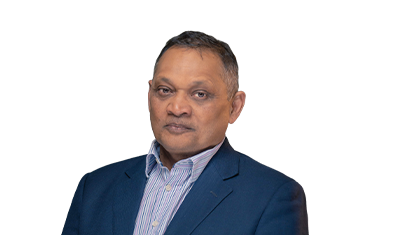
SP Sibisi (71)
Appointed:
1/4/2019
SP Sibisi (71)
1/4/2019
Principal skills:
Accounting, auditing, business leadership, corporate finance, ESG, governance, HR, policy, regulatory, risk management, strategy and M&A
Other directorships:
FirstRand Bank Ltd
|
A |
Ri |
T |
||
|
|
H Singh (65)
Appointed:
25/9/2020
H Singh (65)
25/9/2020
Principal skills:
Accounting, auditing, business development, business leadership, e-commerce, governance, large-scale IT developments and IT innovation, marketing, risk management and technology
Other directorships:
Adcorp Holdings Ltd, Payments Association of South Africa, African Bank Ltd and others

|
N |
S |
T |
||
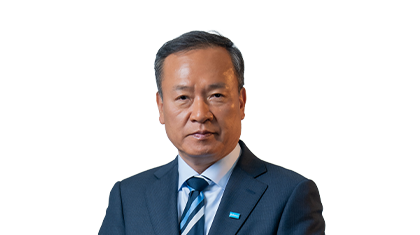
IO Selele (49)
Appointed:
15/7/2022
IO Selele (49)
15/7/2022
Principal skills:
Business leadership, business strategy, ESG, governance, renewable energy, digital technology, marketing, supply chain management, AI and innovation
Other directorships:
Brand SA Trust, RRS Investment Holdings (Pty) Ltd and others
|
Ri |
T |
I |
||
SH Yoon (63)
Appointed:
1/5/2022
SH Yoon (63)
1/5/2022
Principal skills:
Business leadership, corporate finance, digital transformation, e-commerce, global strategy, international telecommunications, marketing, and turning around difficult businesses
Other directorships:
None

|
T |
S |
Ri |
||
M Booi (62)
Appointed:
1/7/2024
M Booi (62)
1/7/2024
Principal skills:
Business strategy, innovation, engineering, policy, regulatory and general management, ICT
Other directorships:
Peco Power (Pty) Ltd
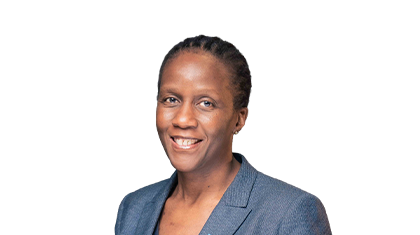
MLB Msimang (49)
Appointed:
1/7/2024
MLB Msimang (49)
1/7/2024
Principal skills:
Regulatory, public policy, business strategy, investment and governance
Other directorships:
Sasol Oil (Pty) Ltd, South 32 Ltd, Woodlands Dairy (Pty) Ltd and others
Committee membership (including Chairperson) reflects the Board Committee membership changes effective from 1 May 2026.
| Committees | |
|
A |
Audit Committee |
|
Ri |
Risk Committee |
|
Re |
Remuneration Committee |
|
N |
Nomination Committee |
|
I |
Investment and Transactions Committee |
|
S |
Social and Ethics Committee |
|
T |
Technology Committee |
|
G |
Group Executive Committee |
|
|
Chairperson |
as at 31 March 2026
|
I |
S |
|||
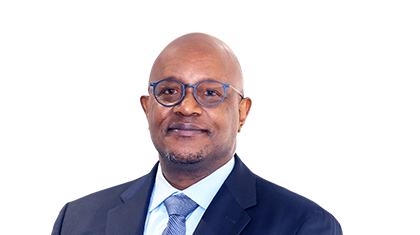
S Taukobong (56)
GCEO
Appointed:
1/1/2022
S Taukobong (56)
GCEO
Appointed:
1/1/2022
Principal skills:
Marketing, customer operations, M&A and business leadership
Other directorships:
Business Connexion Group Ltd, Gyro Properties (Pty) Ltd, Openserve (Pty) Ltd, Trudon (Pty) Ltd1, Telkom SA SOC Ltd

|
S |
||||
NS Dlamini (52)
GCFO
Appointed:
1/12/2023
NS Dlamini (52)
GCFO
Appointed:
1/12/2023
Principal skills:
Finance, business strategy and execution, business leadership and corporate governance
Other directorships:
Business Connexion Group Ltd, Gyro Properties (Pty) Ltd, Openserve (Pty) Ltd, Rossal No65 (Pty) Ltd, Telkom SA SOC Ltd
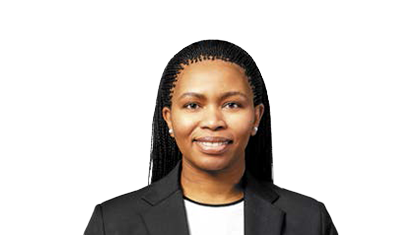
BN Apleni (47)
Openserve: CEO
Appointed:
1/7/2025
BN Apleni (47)
Openserve: CEO
Appointed:
1/7/2025
Principal skills:
ICT, business leadership, M&A, stakeholder engagement and operations management
Other directorships:
None

H Motlekar (57)
BCX: CEO
Appointed:
1/3/2026
H Motlekar (57)
BCX: CEO
Appointed:
1/3/2026
Principal skills:
Finance, business leadership and strategy
Other directorships:
Trudon (Pty) Ltd1

M McNamee (44)
CoCA
Appointed:
15/7/2024
M McNamee (44)
CoCA
Appointed:
15/7/2024
Principal skills:
Stakeholder relations, corporate social responsibility, sustainability and ESG
Other directorships:
Openserve (Pty) Ltd, Telkom Foundation Trust
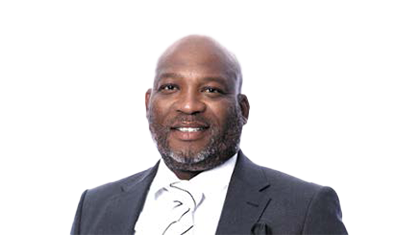
LM Siyo (48)
Telkom Consumer: CEO
Appointed:
1/10/2021
LM Siyo (48)
Telkom Consumer: CEO
Appointed:
1/10/2021
Principal skills:
Business leadership, sales and marketing, strategy, financial management, digital transformation and e-commerce
Other directorships:
Trudon (Pty) Ltd1

SE Mmakau (52)
GCDO
Appointed:
1/4/2024
SE Mmakau (52)
GCDO
Appointed:
1/4/2024
Principal skills:
ICT strategy, business leadership, digital business transformation, technology operating model, data analytics, cyber, risk and governance
Other directorships:
Openserve (Pty) Ltd, Business Connexion Group Ltd Group Exco
| – | Mr J Bogoshi retired from BCX as at 28 February 2026. Mr H Motlekar has been appointed as Acting CEO: BCX from 1 March 2026. |
| – | Ms B Apleni was appointed as CEO: Openserve effective 1 July 2025. |
| 1 | Trudon is in the process of being deregistered and will no longer be a subsidiary once the process is finalised. |
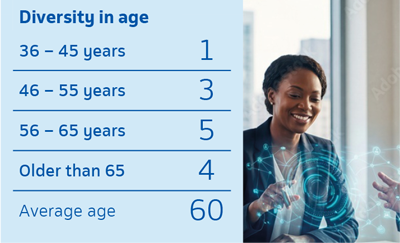
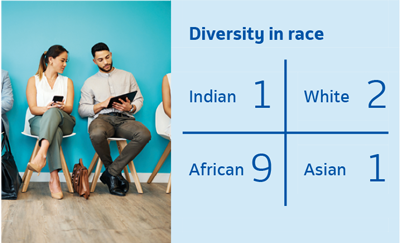
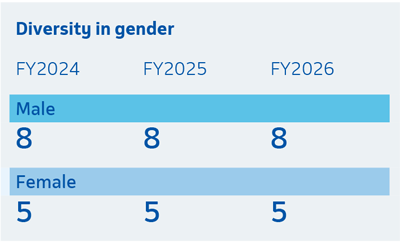
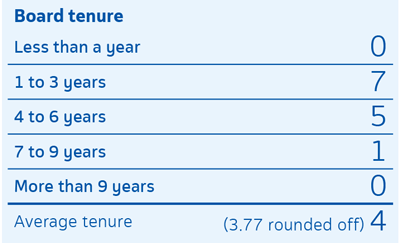
| Diversity of knowledge, skills experience | Number of Board Members |
| IT and digital | 4 |
| Financial services | 9 |
| Regulatory affairs | 9 |
| International business leadership | 6 |
| Risk management | 5 |
| Stakeholder relations | 13 |
| Executive leadership | 13 |
| Telecommunications | 3 |
| ESG and sustainability | 3 |
The office of the Group Company Secretary apprises Directors on Telkom's operations, the legal and regulatory framework within which we operate, and the policies Directors are required to follow.
The Board approved a development plan for FY2026 to address its existing and emerging needs.
The following sessions were conducted during FY2026:
The independent Board evaluation for FY2025 was conducted by an external service provider and finalised in FY2026. Overall, the Board was found to be an effective Board that was diverse, balanced, professionally engaged, and demonstrated increased confidence in the Group's strategic direction.
The Board's governance structures were regarded as broadly effective and its Committees as well-functioning. The Board's commitment to oversight, strategic input and constructive engagement positioned it well to support Telkom's growth ambitions. There was a clear balance of power and no one individual had unfettered powers.
The Board identified the following areas of opportunity or further enhancement:
An action plan has been developed to facilitate the implementation of these enhancements.
There was no specific assessment of Board Members' independence, as the Non-executive Directors (NEDs) of the Board are Independent NEDs and have also not served on the Board for a period exceeding nine years.
The Board continues to be led by an independent Chairperson who facilitates effective communication, collaboration and decision-making among Board Members, ensuring that discussions focus on key issues and objectives.
The Board is satisfied that the Board evaluation process is beneficial and assists the Board in identifying areas of opportunity and enhancement, ensuring good performance and effectiveness.
At each AGM, a third of the Non-executive Directors retire by rotation. Retiring Directors are selected from among the longest-serving Directors since their appointment or re-election. The details of the Non-executive Directors set to retire by rotation are set out in the Notice of the AGM for 2026.
The Board conducts annual reviews on executive succession planning and periodic reviews on Board succession planning to ensure continuity and sustainability and to increase Telkom's resilience and adaptability to evolving challenges and opportunities.
In Telkom, the Group Company Secretary performs the duties as set out in section 88 of the Companies Act, in line with King IV's recommended practices. The responsibilities include, but are not limited to:
Where required, the Board can request to obtain independent professional advice through the Board-approved process.
The Group Company Secretary maintains an arm's-length relationship with Directors and oversees governance in all subsidiaries in line with the Group governance framework and the operating model.
The Group Company Secretary and the Company Secretariat function were evaluated in May 2026.
The Board is satisfied with the competence, qualifications and experience of the Group Company Secretary and the effectiveness of the Company Secretariat function.
The Board has established and delegated certain functions to seven Committees. Each Committee is guided by its respective terms of reference, which articulates its roles, responsibilities and authority. The Committee terms of reference documents are available online at https://group.telkom.co.za/ir/Governance/ToR-Committees.shtml.
The Committees may invite external advisors to provide professional advice on specialised matters as well as any member of senior management to their meetings, should the need arise.
The current Committee composition ensures that Members collectively are adequately and appropriately skilled and experienced to effectively discharge their duties.
Audit Committee
The Audit Committee is a statutory committee established in terms of section 94(7) of the Companies Act. The Committee supports the Board by overseeing financial reporting, including ESG, financial disclosures and the effectiveness of the Group's control systems, in line with statutory requirements.
KA Rayner (Chairperson)
Members: PCS Luthuli, KP Lebina, H Singh, O Ighodaro
Permanent Invitees: GCFO, GCEO, Group Executive: Internal Audit, Group Executive: Regulatory and Legal, external auditors
The Committee considered the following key matters, among others:
The Committee is satisfied that it fulfilled its duties in terms of its mandate inFY2026.
Investment and Transactions Committee
The Investment and Transactions Committee deals with any significant investment or transaction relating to the acquisition and/or disposal of any assets. This includes any equity injection or possible merger or acquisition approved by the Board. The Committee ensures that post-merger integration plans for approved transactions are adequate. It monitors the performance of investments against the original investment criteria and pre-investment assumptions through formal post-acquisition reviews.
The Committee is led by Mr PCS Luthuli and comprises Independent Non-executive Directors and Executive Directors. The Committee Members collectively are adequately skilled and possessed the appropriate skills and experience required todischarge their duties in FY2026.
PCS Luthuli (Chairperson)
Members: MLB Msimang1, KP Lebina, KA Rayner,
S Taukobong,
SH Yoon, BKennedy
Resigned: O Ighodaro
Permanent Invitees: GCFO, Group Executive: Mergers and Acquisitions
The Committee considered the following key matters, among others:
The Committee is satisfied that it fulfilled its duties in terms of its mandate in FY2026.
Technology Committee
The Technology Committee assists the Board with oversight of technology and innovation strategies, plans and operations related to information security, cybersecurity, data privacy and third-party technology strategies.
The Committee is led by Prof H Singh and comprises Independent Non-executive Directors. The Committee Members collectively are adequately skilled and possess the appropriate skills and experience required to discharge their duties.
Prof H Singh (Chairperson)
Members: Dr SP Sibisi, IO Selele, SH Yoon1,
PCS
Luthuli, M Booi, MLB Msimang1
Resigned: KA
Rayner
Permanent Invitees: Chief Digital Officer, GCEO, GCFO
The Committee considered the following key matters, among others:
The Committee is satisfied that it fulfilled its duties in terms of its mandate in FY2026.
Nominations Committee
The Nominations Committee is responsible for governance-related matters, such as the nomination and appointment of Board and Committee Members and Board succession planning. The Committee works closely with the Remuneration Committee on succession planning for Executive Directors and other critical roles.
MG Qhena (Chairperson)
Members: EG Matenge-Sebesho, IO Selele, B Kennedy
Permanent Invitees: GCEO
The Committee considered the following key matters, among others:
The Committee is satisfied that it fulfilled its duties in terms of its mandate in FY2026.
Remuneration Committee
The Remuneration Committee's primary responsibility is to set the Group's remuneration policy and ensure it aligns with the Group's strategy, shareholder interests and regulatory requirements, on behalf of the Board.
The Committee sets and reviews total remuneration and other incentives for senior executives and all employees. It ensures that pay decisions are ethical, fair and competitive, and linked to Company short- and long-term performance, while attracting and retaining talent.
B Kennedy (Chairperson)
Members: O Ighodaro, KP Lebina, MG Qhena
Permanent Invitees: GCEO, GCFO, Chief HR Officer, Group Executive: Remuneration and Performance Management
The Committee considered the following key matters, among others:
The Committee is satisfied that it fulfilled its duties in terms of its mandate in FY2026.
Risk Committee
The Risk Committee primarily assists the Board in providing oversight of risk management (including compliance, disaster recovery and business continuity), thus ensuring the quality, integrity and reliability of the Group's risk management processes.
O Ighodaro (Chairperson)
Members: EG Matenge-Sebesho, KA Rayner, SP Sibisi, H Singh, SH Yoon, M Booi1
Permanent Invitees:GCEO, GCFO, Group Executive: ERM, Forensics and Insurance, external auditors, Group Executive: Internal Audit, Chief of Corporate Affairs, Group Chief Digital Officer, Group Executive: Group Legal Services
The Committee considered the following key matters, among others:
The Committee is satisfied that it fulfilled its duties in terms of its mandate in FY2026.
Social and Ethics Committee
The Social and Ethics Committee assists the Board in overseeing ethical conduct, responsible corporate citizenship, labour and employment practices, diversity, equity and inclusion, sustainability performance, health and safety, and consumer and stakeholder relationships. It monitors the implementation of ethics awareness and training, fraud and forensics reporting, and compliance with legislation. It oversees the Telkom Foundation and Group's social investment initiatives, and reports in full on these activities in the sustainability report. It oversees the integrity and completeness of ESG disclosures in the integrated and sustainability reports, and ensures Telkom's values, ethical standards and sustainability practices are embedded Group-wide.
E Matenge-Sebesho (Chairperson)
Members: Dr SP Sibisi, MLB Msimang,
IO Selele, M BooiM2, the GCEO and GCFOi, H Singh, SH Yoon,
M Booi
Resigned: B Kennedy
Permanent Invitees: Chief of Corporate Affairs, Chief of Human Resources and other executives as required
The Committee considered the following key matters, among others:
1 Appointed effective 1 May 2026.
2 Appointed effective 1 May 2026, subject to shareholder approval at the 2026 AGM.
The Committee is satisfied that it fulfilled its duties in terms of its mandate in FY2026.
| Board | Audit Committee |
Risk Committee | Remuneration Committee |
Nominations Committee |
Investment and Transactions Committee |
Social and Ethics Committee |
Technology Committee |
Joint Audit and Social and Ethics Committees |
Joint Audit
and Investment and Transactions Committees |
|
|
A
|
Ri
|
Re
|
N
|
I
|
S
|
T
|
A
S
|
A
I
|
||
| Independent Non-executive Directors1 | ||||||||||
| MG Qhena | 7/7 | 5/5 | 3/3 | |||||||
| EG Matenge-Sebesho | 7/7 | 4/4 | 3/3 | 5/5 | 1/1 | |||||
| B Kennedy | 7/7 | 5/5 | 3/3 | 3/42 | 5/5 | 1/1 | ||||
| H Singh | 6/72 | 6/6 | 4/4 | 4/4 | 1/1 | |||||
| KP Lebina | 7/7 | 6/6 | 5/5 | 4/4 | 1/1 | 1/1 | ||||
| PCS Luthuli | 7/7 | 6/6 | 4/4 | 4/4 | 1/1 | 1/1 | ||||
| IO Selele | 7/7 | 3/3 | 5/5 | 4/4 | 1/1 | |||||
| KA Rayner | 7/7 | 6/6 | 4/4 | 4/4 | 4/4 | 1/1 | 1/1 | |||
| O Ighodaro | 7/7 | 6/6 | 4/4 | 5/5 | 4/4 | 1/1 | 1/1 | |||
| SP Sibisi | 6/72 | 4/4 | 4/52 | 4/4 | ||||||
| SH Yoon | 7/7 | 4/4 | 4/4 | |||||||
| M Booi | 7/7 | 4/4 | ||||||||
| MLB Msimang | 7/7 | 5/5 | 1/1 | |||||||
| Executive Directors | ||||||||||
| S Taukobong | 7/7 | 6/6 | 4/4 | 5/5 | 3/3 | 3/42 | 4/52 | 4/4 | 1/1 | |
| NS Dlamini | 7/7 | 6/6 | 4/4 | 5/5 | 4/4 | 5/5 | 4/4 | 1/1 | ||
| 1 | Reflects the Board Committee composition and attendance in FY2026 (from 1 April 2025 to 31 March 2026). |
| 2 | Apologies. |
Telkom applies a dynamic and integrated combined assurance approach to enhance and streamline assurance-related activities across the Group.
The combined assurance framework ensures co-ordinated, accountable and guided execution of all assurance activities, aligning them with evolving business challenges and opportunities.
The combined assurance model aims to align and integrate all assurance services and functions so these can work in unison. This enables an effective control environment, maintains the integrity of information for decision-making, and supports the integrity of Telkom’s external reports and underlying statements.
The Board, through the Audit Committee (supported by the Risk Committee), oversees the effectiveness of the combined assurance model. It ensures that the scope of combined assurance is informed by the principal risks and opportunities that materially affect the Group’s ability to create value.
Telkom's assurance framework encompasses its business units, functional areas and internal and external assurance providers, and is supported by assurance forums. This collective effort guarantees that our combined assurance mandate is effective and adaptable. Our regulators (e.g. ICASA and the Competition Commission) may institute reviews to gain assurance that Telkom complies with applicable laws and regulations.
Telkom Group Internal Audit (TGIA or internal audit), in collaboration with Telkom ERM, leads the co-ordination and facilitation of the Group’s combined assurance efforts across the lines of assurance. TGIA aligns its activities with the other assurance providers, including the external auditors, so that Telkom’s significant risks are adequately covered and managed.
The Audit Committee is satisfied with the effectiveness of the combined assurance arrangements.
The combined assurance framework is outlined in the diagram below.
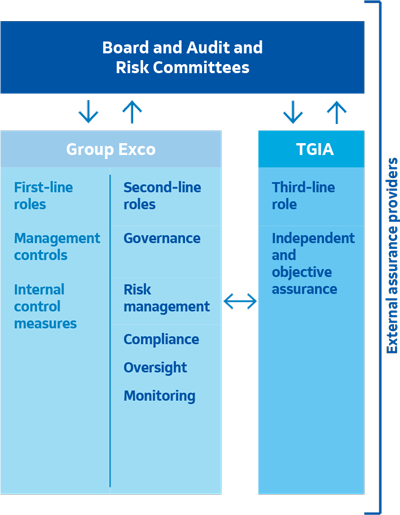

Accountability and reporting

Delegation, direction, resource and oversight

Alignment, communication, co-ordination and collaboration
TGIA is a Group-wide function that provides independent and objective assurance and advisory services to add value and enhance Telkom’s operations. TGIA is guided by the Telkom Group Internal Audit charter, which sets out the terms of reference for internal audit activity. The charter serves as a basis for governance of the internal audit activity necessary for TGIA to fulfil its role and to meet the performance criteria set by the Board and Audit Committee. The charter was updated and approved at the Audit Committee meeting in November 2025. The Chief Audit Executive reports functionally to the Audit Committee Chairperson and administratively to the GCFO.
The Chief Audit Executive attends meetings of the Audit and Risk Committees and is a standard invitee to Group Exco meetings and other Committee meetings comprising mostly senior executives. This promotes the independence of internal audit and the accomplishment of its responsibilities.
TGIA applies a risk-based audit methodology in developing its annual audit plan. It aligns the plan with the Group’s strategic risks, considering any opportunities and challenges in the respective operating environments. TGIA supports all business units in achieving their strategic objectives. It collaborates with other assurance providers to continually enhance its combined assurance efforts.
The Audit Committee approves the audit plan annually. TGIA reviews and revises the plan quarterly, as relevant, to align with key business priorities and changes in the business and risk environment. All changes to the plan are tabled at the Audit Committee for approval.
In FY2026, TGIA executed its internal audit plan and prepared the plan for FY2027. TGIA followed a systematic approach to evaluate and enhance the effectiveness of governance, risk management and internal control processes. It provided assurance to the Group’s stakeholders by:
TGIA conducts ongoing internal quality assessments and is subject to an external quality assurance review at least once every five years. In March 2026, an external review was conducted by the Leadership Academy for Guardians of Governance, a wholly owned subsidiary of the Institute of Internal Auditors South Africa. The review found that TGIA generally conforms with the International Standards for the Professional Practice of Internal Auditing and performs its services effectively.
The Board is committed to principles of ethical conduct and good corporate governance. These include responsibility, accountability, fairness and transparency. The Board upholds ethical leadership and sets the tone from the top by committing to an annual ethics leadership pledge. The pledge is cascaded down to subsidiary level and adopted by the respective subsidiary boards.
The Board acknowledges that an ethical culture is fundamental to achieving sustainable performance. To uphold and give practical expression to Telkom’s values and standards, the Board established and approved a Group Code of Ethics that promotes ethical behaviour and principled decision-making.
Telkom fosters an ethical culture by maintaining zero tolerance for fraud, corruption and unethical conduct. Ethics governance is guided by the Group Ethics Officer with support from certified Ethics Officers. This enables centralised ethics management, compliance with the Group Code of Ethics, reinforced awareness and reporting, and reliable ethics intelligence for governance reporting.
During the year, a Group-wide ethical culture was advanced through continuous awareness, training and advisory support. The updated Group Code of Ethics guides employee conduct. The Code is supported by the conflicts of interest policy, gifts and entertainment policy, prevention of fraud and corruption policy, and whistle-blowing policy. Annual ethics compliance remained high at 99%, with 88% declaration-of-interest compliance. Telkom participated in International Fraud Awareness Week, launching ethics and anti-fraud online training modules in collaboration with Group Forensics.
Going forward, we will implement the renewed ethics strategy for FY2027 – FY2030. In line with the OneTelkom approach, the strategy seeks to embed ethics in leadership, operations and governance. To facilitate this, we aim to develop AI-enabled tools to transform static policies into a practical, interactive platform that helps employees understand, apply and uphold ethical standards.
The share dealing policy remained standalone due to its critical role in promoting transparent disclosure. The policy is informed by the Financial Markets Act, 19 of 2012 and the JSE Listings Requirements. All relevant Directors, Prescribed Officers and Company Secretary persons ("Affected Persons") must obtain clearance from the dealing signatories before trading, and in accordance with the JSE Listings Requirements, a SENS announcement must be released thereafter for Affected Persons and their associates. We do not permit trading in the Company’s securities during prohibited periods, which comprise price-sensitive periods and closed periods (financial and cautionary closed periods). Closed periods are communicated to Affected Directors, persons and employees under the share dealing policy.
We extensively reviewed the share dealing policy in FY2026 to enhance certain clauses and ensure alignment with the JSE Listings Requirements. Enhancements included automation of the dealing process by Affected Persons.
The revised Group Code of Ethics is supported by the standalone conflicts of interest policy, and both are based on the principles of King IV. The Code stipulates that Directors and employees should act in the best interests of the Company. They should ensure that real or perceived conflicts of interest are disclosed and adequately managed.
Directors must disclose potential conflicts of interest timeously in the interests of transparency. All Directors (including Non-executive Directors) must comply with the obligations outlined in section 75 of the Companies Act to disclose personal financial interests. Employees must disclose all outside corporate interests and associations, including directorships, shareholdings and other business interests. Disclosures must be made electronically on an annual basis at a minimum, or when a conflict arises, and upon appointment in the Group.
The economic crimes forum is an operational governance forum that co-ordinates activities to combat economic crime across the Group. With monitoring and oversight by the forum, participating functions introduced various measures to prevent fraud, theft, corruption and general irregular conduct inconsistent with Telkom's values.
We outsmarted fraudsters through collaboration and technology-enabled solutions. The cybersecurity functions introduced fraud detection controls, including smart digital controls to improve customer authentication. As a result, incidents of cyber-perpetrated subscription fraud declined substantially, along with the associated losses.
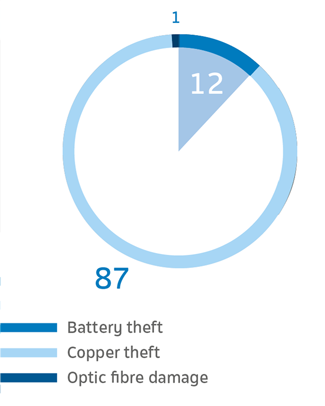
While incidents relating to copper cable and battery theft declined, incidents relating to optic fibre damage increased. We are exploring various technology-enabled solutions to address this.
We support this collaborative and proactive approach to fighting economic crime by maintaining a positive ethical and risk culture. To this end, the combined assurance awareness forum co-ordinated several initiatives, including:
Collectively, these initiatives resulted in an increase in the number and quality of incidents reported to Telkom’s whistle-blowing hotline. They improved customers' and third parties' understanding of scams and other types of fraud, and facilitated proactive engagement across the Group on fraud and economic crime.
In FY2026, we saw an increase in syndicate-driven economic crime. We addressed most cases successfully through monitoring, improved fraud data analytics, and working with external stakeholders such as the police. Through Group Revenue Assurance and Fraud Management and the credit management function, we proactively monitor areas that are vulnerable to fraud, including novel types of fraud. Where necessary, we conduct fraud detection reviews.
We continue to improve our in-house blacklisting process, which includes maintaining a central database of perpetrators of economic crimes against Telkom. The Communication Risk Information Centre, of which Telkom is a member, is exploring an industry-wide blacklisting process for mobile network operators.
We subject on-boarded service providers to supplier due diligence reviews, and continually evolve our third-party risk management processes to align with best practices and governance requirements.
Encouraging and protecting whistle-blowers is a cornerstone of fraud risk management at Telkom. We formalised this in FY2025 by introducing the Whistle-blowers and Investigation Participating Parties Protection Procedure.
In FY2026, 1 494 incidents were reported to the whistle-blowing hotline, a 21% increase over FY2025. We are grateful to those who reported incidents. They have helped us entrench an ethical and risk-aware culture at Telkom.
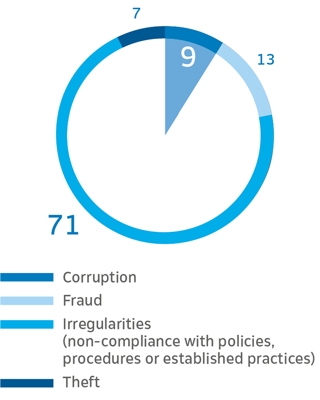
Telkom Group Forensics (TGF) substantiated or confirmed 64% of the allegations that were reported for investigation. The graph below shows the percentage split of incident types dealt with by TGF.
The top three incident types dealt with by Telkom Physical Security (TPS) were battery theft, copper cable theft and optic fibre damage. Together, incidents of these three types increased by 49% year on year. However, this was mostly due to increased damage of optic fibre cables, which criminals tend to mistake for copper cables. Theft of batteries and copper cables declined by 69% and 20%, respectively. The graph below shows the percentage split of the top three types for FY2026.
The following consequences emanated from the work done by TGF and TPS in FY2026:
In FY2027, we will continue to improve customer awareness, focusing on emerging fraud trends, such as the increase in social engineering scams. As AI advances, these scams are becoming increasingly sophisticated, posing a threat to traditional fraud controls.
We will also conduct activities to improve our fraud risk management processes. These will include an ISO 37003 Fraud Control Management Systems gap analysis, and the implementation of a new system for tracking forensic recommendations and business intelligence tools.